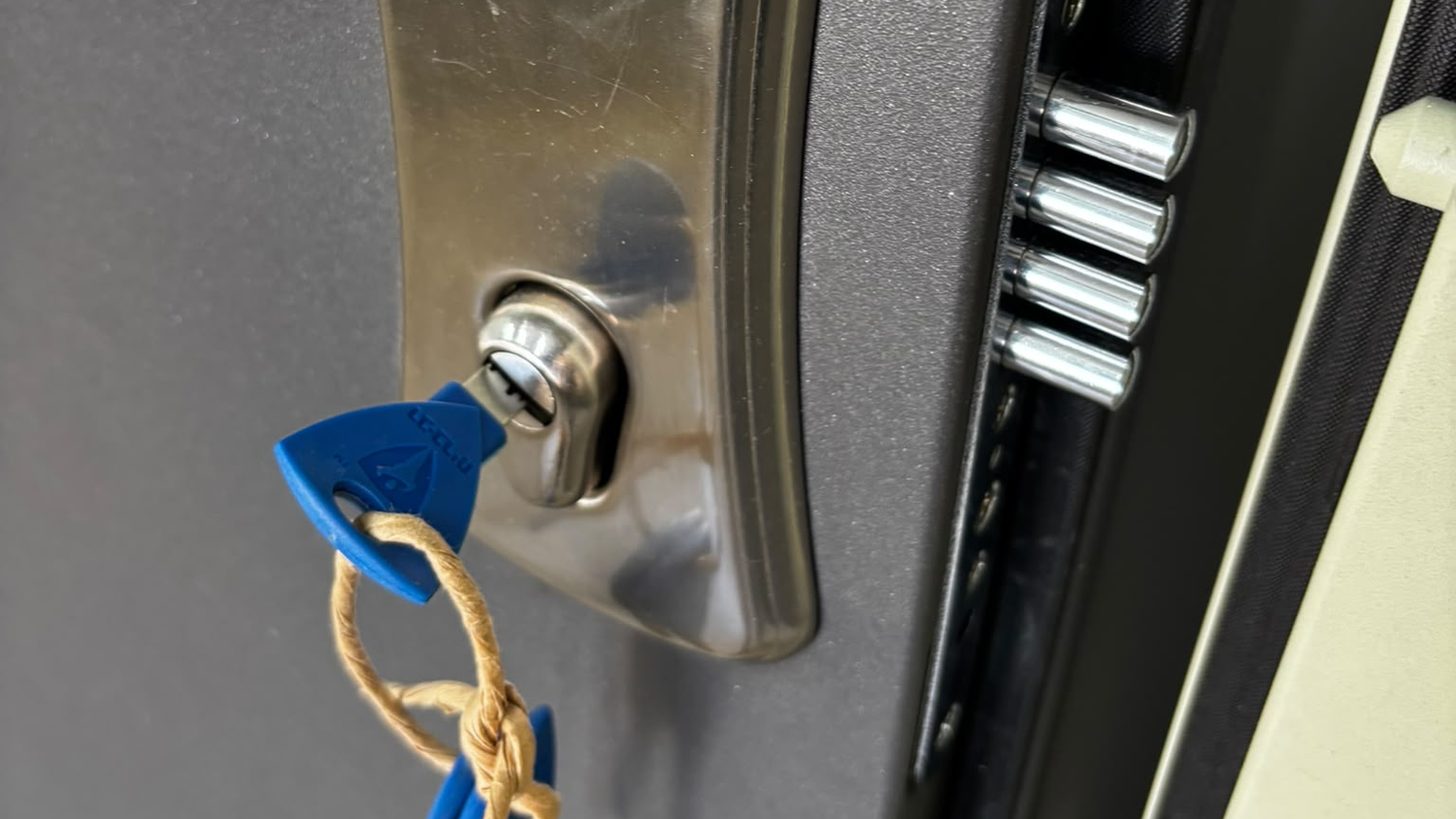
Almost every door order comes with the question: “thumbturn or key?” There is a good answer, but it depends on who lives in the house. First, it helps to know what a cylinder is. It is the part the key goes into. The mechanism with the bolts sits inside the door, and the cylinder is what turns it. That is why a cylinder can be replaced in a few minutes without touching the lock or replacing the door.
What a thumbturn (parpar) cylinder is
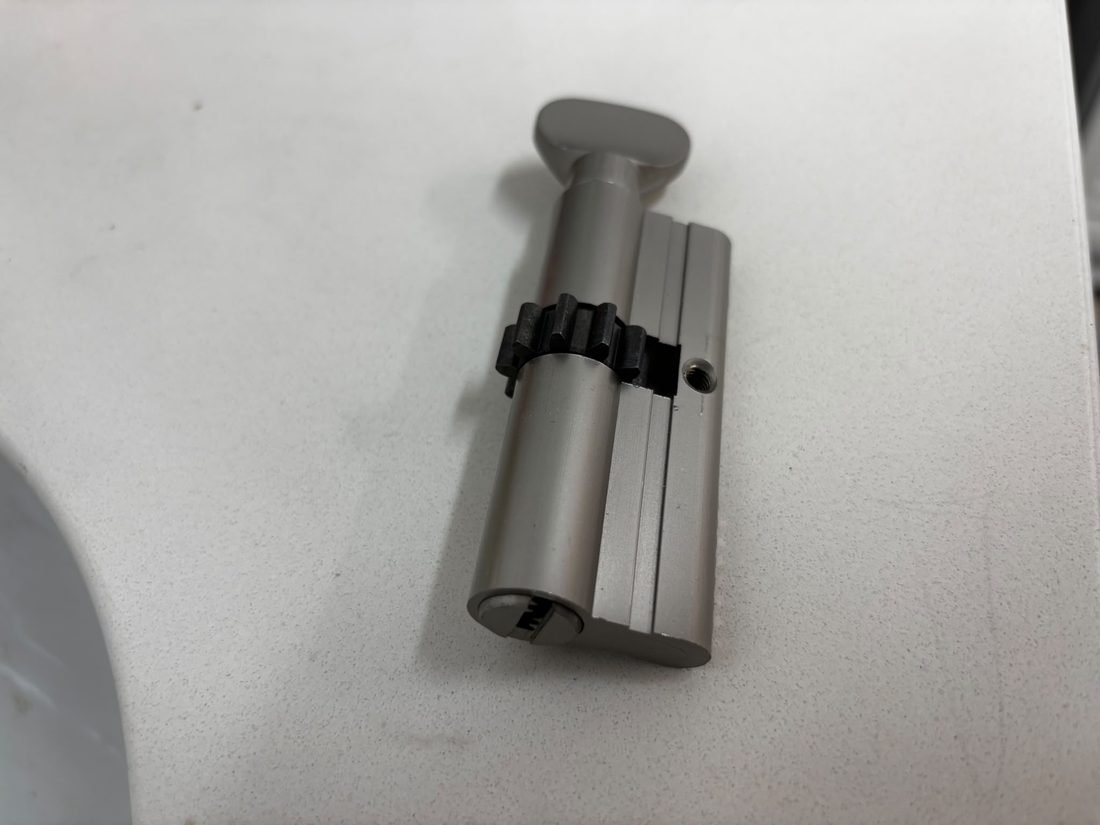
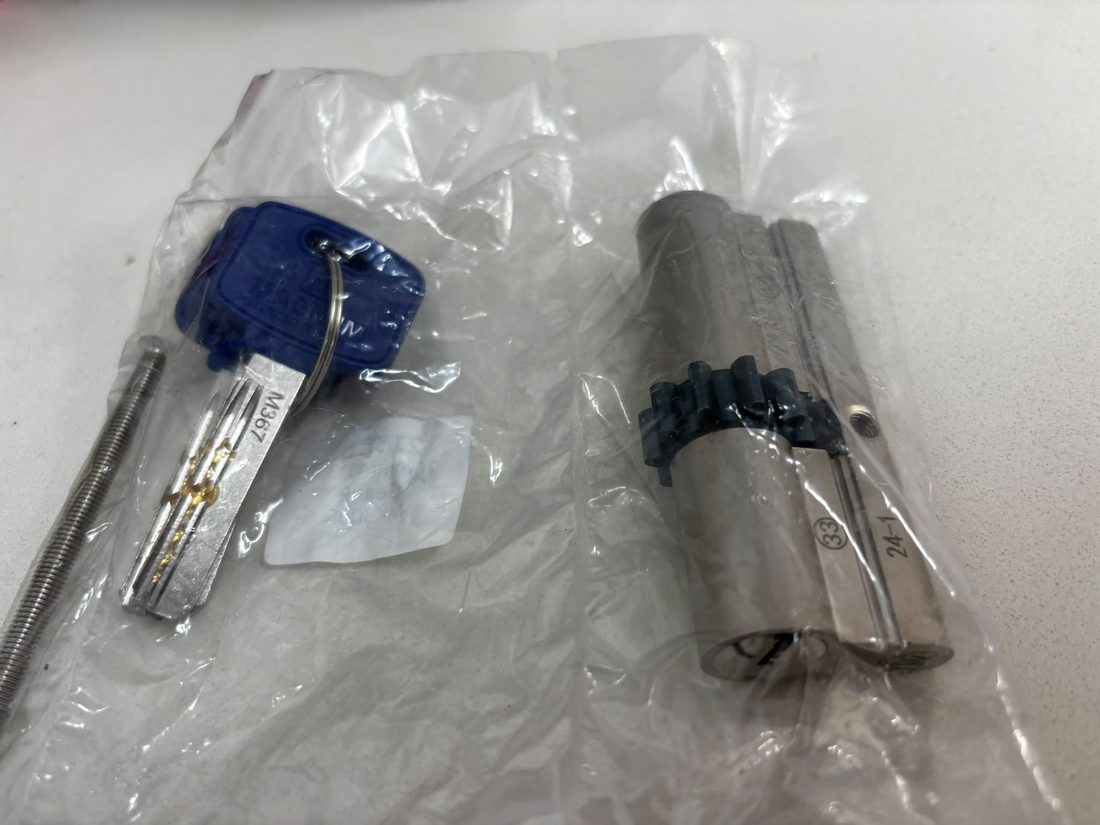
A thumbturn cylinder has an ordinary keyway on the outside and a small knob instead of a keyway on the inside. From outside you lock and unlock with the key, as always. From inside you turn the knob by hand, without looking for a key. A key-key cylinder has a keyway on both sides, so you need a key inside too. In terms of protection from outside there is no difference: the same cylinder model protects at the same level, with a thumbturn or without. The whole difference is what happens inside the house.
Why a thumbturn suits most homes
- A fast way out in an emergency. In a fire, in smoke or in the dark there is no time to look for a key. The safety booklet of Israel's Fire and Rescue service and the Home Front Command recommends a thumbturn lock for exactly this reason: it “helps you get out of the house fast… no need to look for the key”. If you don't have one, the same booklet says to keep the key in a fixed place near the exit. The full booklet (Hebrew).
- No key left inside. With a key-key cylinder, many people leave the key in the inside. In an ordinary cylinder a key stuck inside blocks the key you try to insert from outside, and whoever is outside needs a locksmith. With a thumbturn that can't happen.
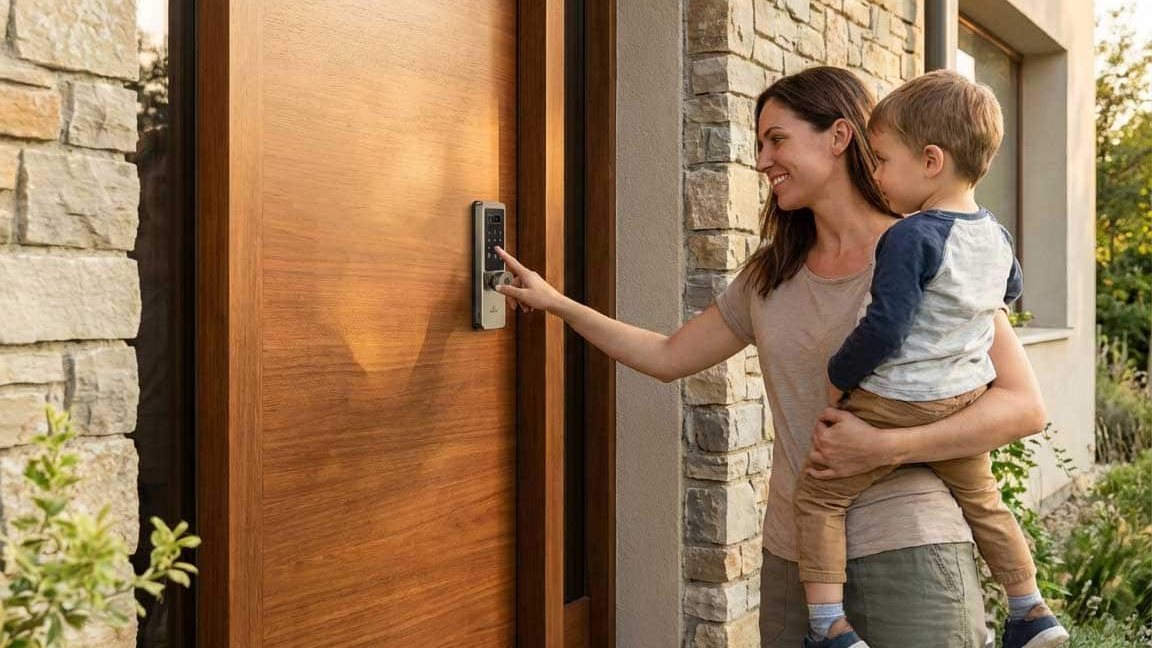
- Convenience. You lock up at night with a turn of the hand, and you don't need a key every time you step out with the rubbish.
When a key on both sides is better
Whatever the knob makes easy, it makes easy for everyone in the house. In most homes that is exactly what you want, but there are three situations where it becomes a problem:
- A small child who can reach the knob. A toddler who has learned to turn a knob can open the door and walk out alone, or leave it open at night. With a key-key cylinder the key is kept high up, out of reach.
- An older person who may wander out. In families with someone who has dementia and tends to leave the house and wander, a key on both sides lets the family decide when the door opens.
- Glass near the lock. On a door with a glass panel, or with a window right next to the door, a burglar who breaks the glass can reach in and turn the knob. The UK police advise laminated glass, which doesn't shatter easily, or a lock without a knob in such cases.
If you choose a key on both sides for reasons like these, keep a key in a fixed place near the door, out of children's reach, so you can get out fast if you need to. There are also cylinders with an “emergency function”, such as Mul-T-Lock's, which open from outside even when a key is stuck inside. That helps when an older person lives alone and leaves the key in the door. And the decision doesn't have to be forever: when the children grow up, the cylinder is swapped in a few minutes without touching the lock.
| Thumbturn | Key-key | |
|---|---|---|
| Fast exit in a fire | ✔ Turn and go | Only if the key is close |
| Key left inside | ✔ Can't happen | Blocks the key from outside (unless it has an emergency function) |
| A toddler at the door | Can open it alone | ✔ Can't open it |
| An older person who may wander | Can leave alone | ✔ The family decides |
| Glass near the lock | A hand can reach the knob | ✔ Needs a key |
| Protection from outside | Same level | Same level |
Our bottom line: a thumbturn in most homes, because the fast way out is worth the most. A key on both sides when there is a toddler who reaches the door, an older person who may wander out, or glass near the lock. Rav-Bariach also supplies its doors with either a thumbturn or a key cylinder, whichever the customer asks for.
Which Rav-Bariach cylinder to choose
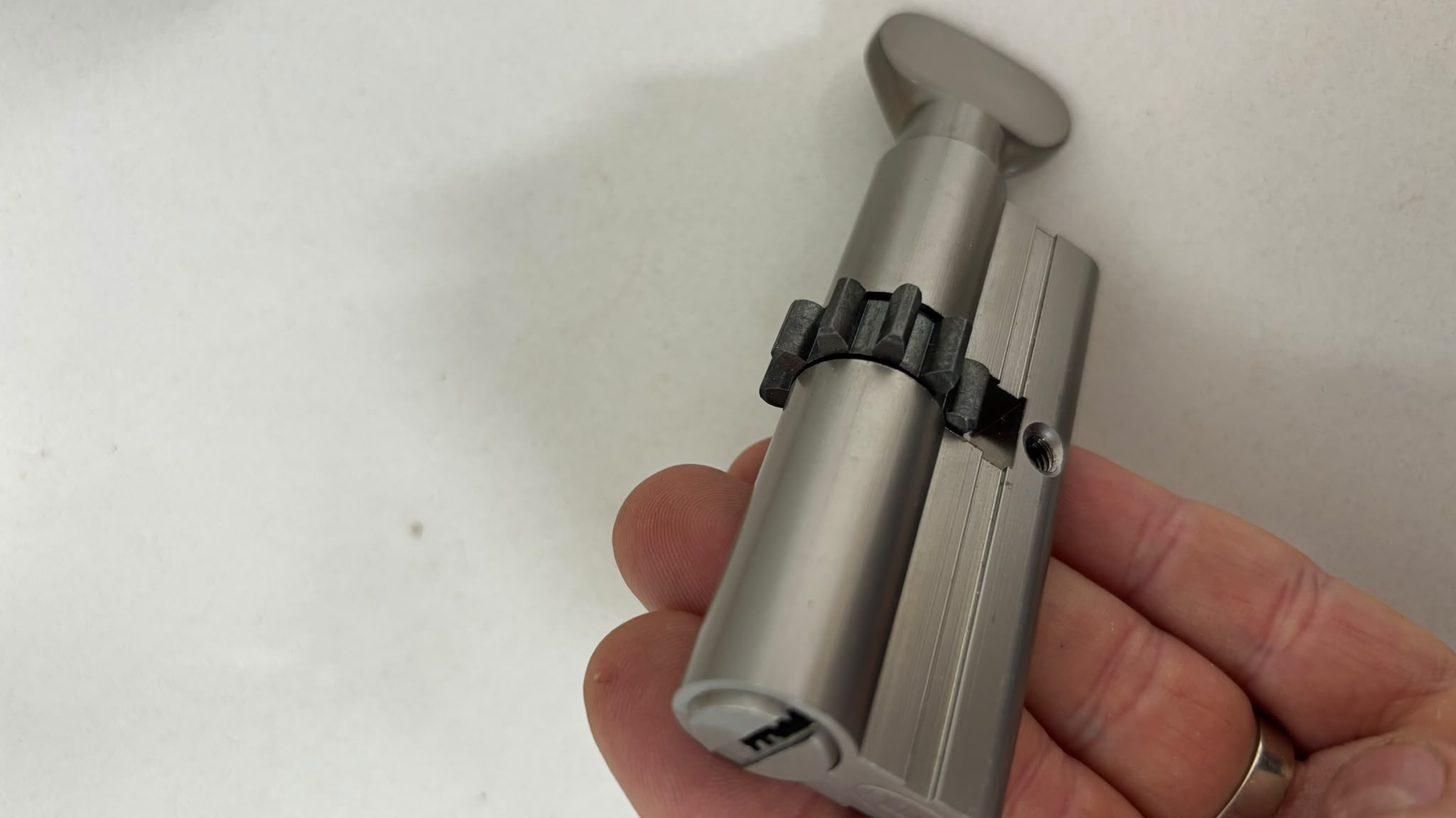
Our doors come with a Rav-Bariach cylinder, thumbturn or key, whichever you choose. Rav-Bariach makes several grades of cylinder, and they differ in two things: how hard they are to defeat by the quiet methods (drilling, picking, “bumping”), and whether the key can be copied anywhere or only with a copy card. According to Rav-Bariach's website:
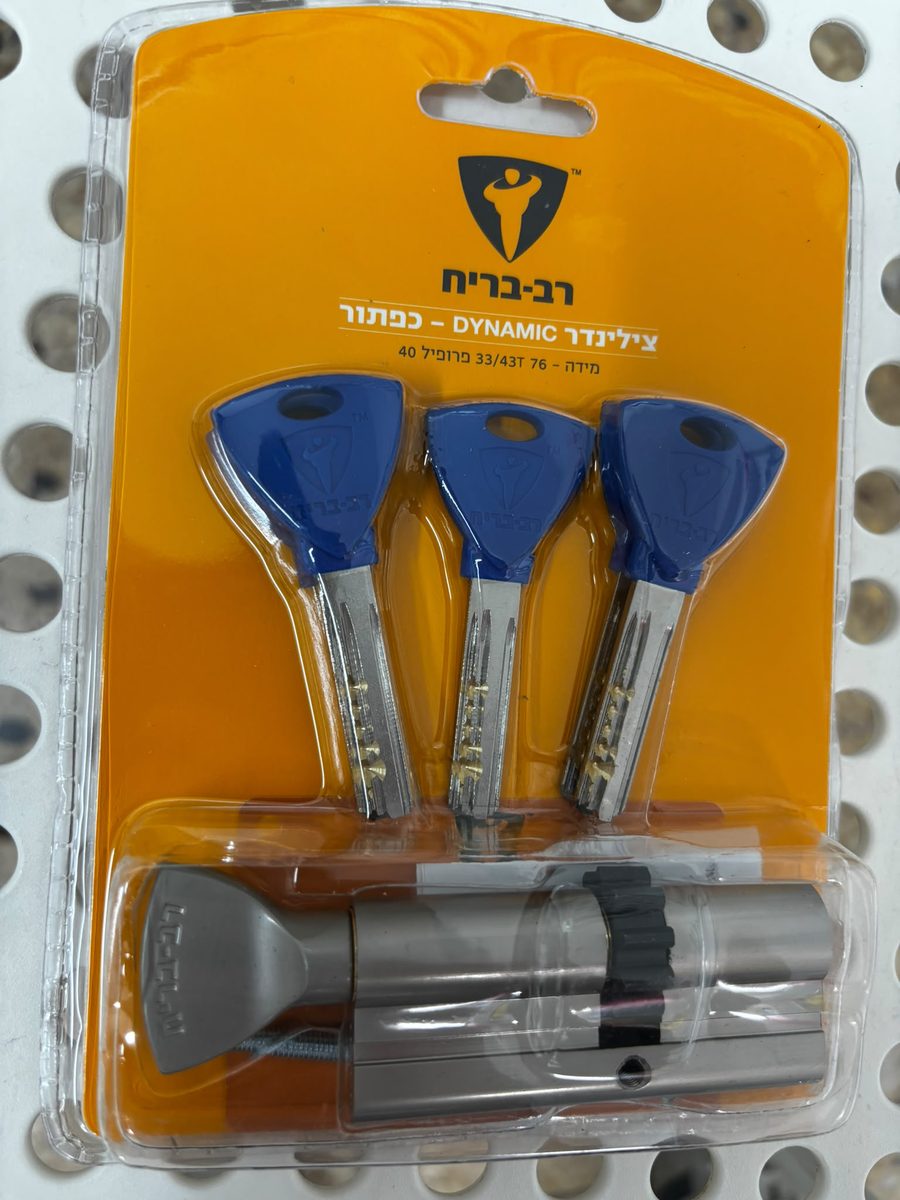
- DYNAMIC. The basic cylinder, 76 mm with a gear wheel. The site lists no special protection against quiet attacks for it, and no copy card.
- DYNAMIC PLUS. Adds anti-drill protection. Keys can be copied at any key-cutting counter.
- KEYLOCX. Anti-drill protection, a floating pin against picking, protection against “bumping”, and a copy card: without the card, the key can't be copied.
- LOCXIS and LOCXIS ID. Everything Keylocx has plus a telescopic pin. With ID, keys are copied only by a Rav-Bariach certified locksmith.
- 3LOCX. The new model, with a copy card carrying a QR code that is checked in Rav-Bariach's app.
How to choose? If the house keys have passed through many hands (renovators, previous tenants, a cleaner), or it matters to you that nobody copies a key without your knowledge, choose a cylinder with a copy card, Keylocx and up. If the door is new and the keys are only with you, a basic cylinder does the job. And if you're weighing up Mul-T-Lock: in a Midrag poll of 114 locksmiths, most (75%) picked Mul-T-Lock's MTL800 for a multi-bolt door. It costs more, but it has a loyal following among the trade.
How to know which size you need
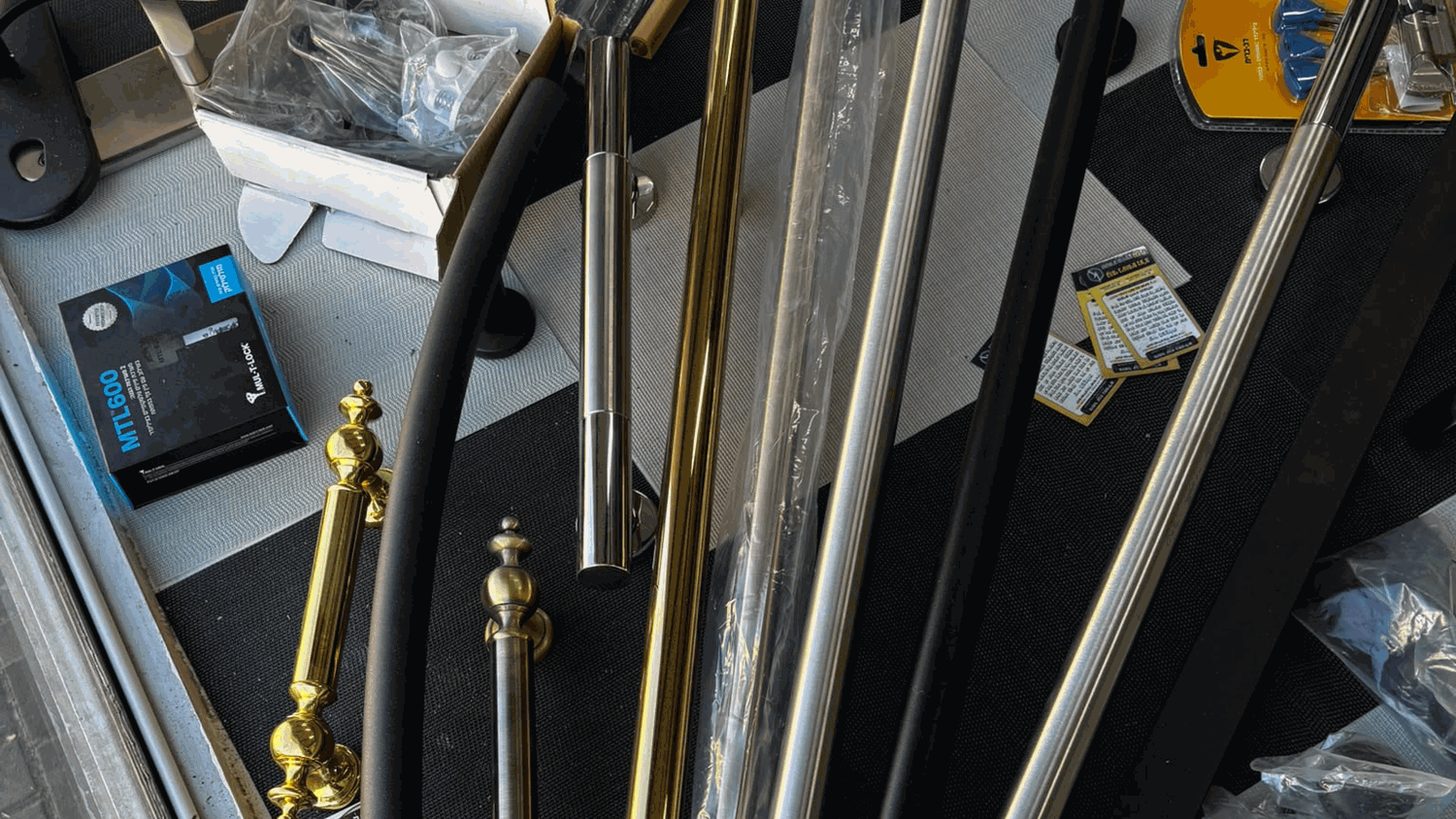
A cylinder is measured from the screw that holds it, in the middle, to each end. The pack in the photo says 76 with 33/43: 33 mm on one side, 43 on the other, 76 in total. On Israeli steel doors the common sizes are 66 and 76 mm. The important rule: the cylinder shouldn't stick out more than 3 mm beyond the guard on the outside. A protruding cylinder can be gripped with a tool and snapped. So measure the old one before buying a new one, and check there is a hardened-steel cylinder guard around it, which makes it hard to drill or pull out.
What replacing a cylinder costs
The price has two parts: the cylinder itself and a locksmith's visit. According to Midrag's price lists (2025 data, VAT included):
| What is replaced | Price range, fitted |
|---|---|
| Simple cylinder (e.g. Magnum) | ₪300–₪350 |
| Standard Rav-Bariach cylinder | ₪300–₪450 |
| Locxis or Interactive | ₪400–₪550 |
| Mul-T-Lock MTL600 | ₪550–₪600 |
| Mul-T-Lock MTL800 | ₪650–₪800 |
| Actual average, cylinder in a Rav-Bariach door | ₪598 (₪385 to ₪880) |
On a new door from us the cylinder is already included in the price, and so is the thumbturn-or-key decision: just tell us when we measure. And if the key still turns hard after a new cylinder, or the bolts don't go all the way in, the problem is probably the mechanism or the door's alignment. We cover that in our guide to replacing a multi-bolt lock. If you want a second lock with its own key, you can add a safe lock above the existing one.
Where we install
We measure, supply and install across central Israel. You can see prices and arrival times by city on the pages for Netanya, Herzliya, Ra'anana, Tel Aviv, Ramat Gan, Petah Tikva, Holon, Bat Yam, Rishon LeZion, Ness Ziona, Rehovot, Yavne, Modiin, Jerusalem and Ashdod.