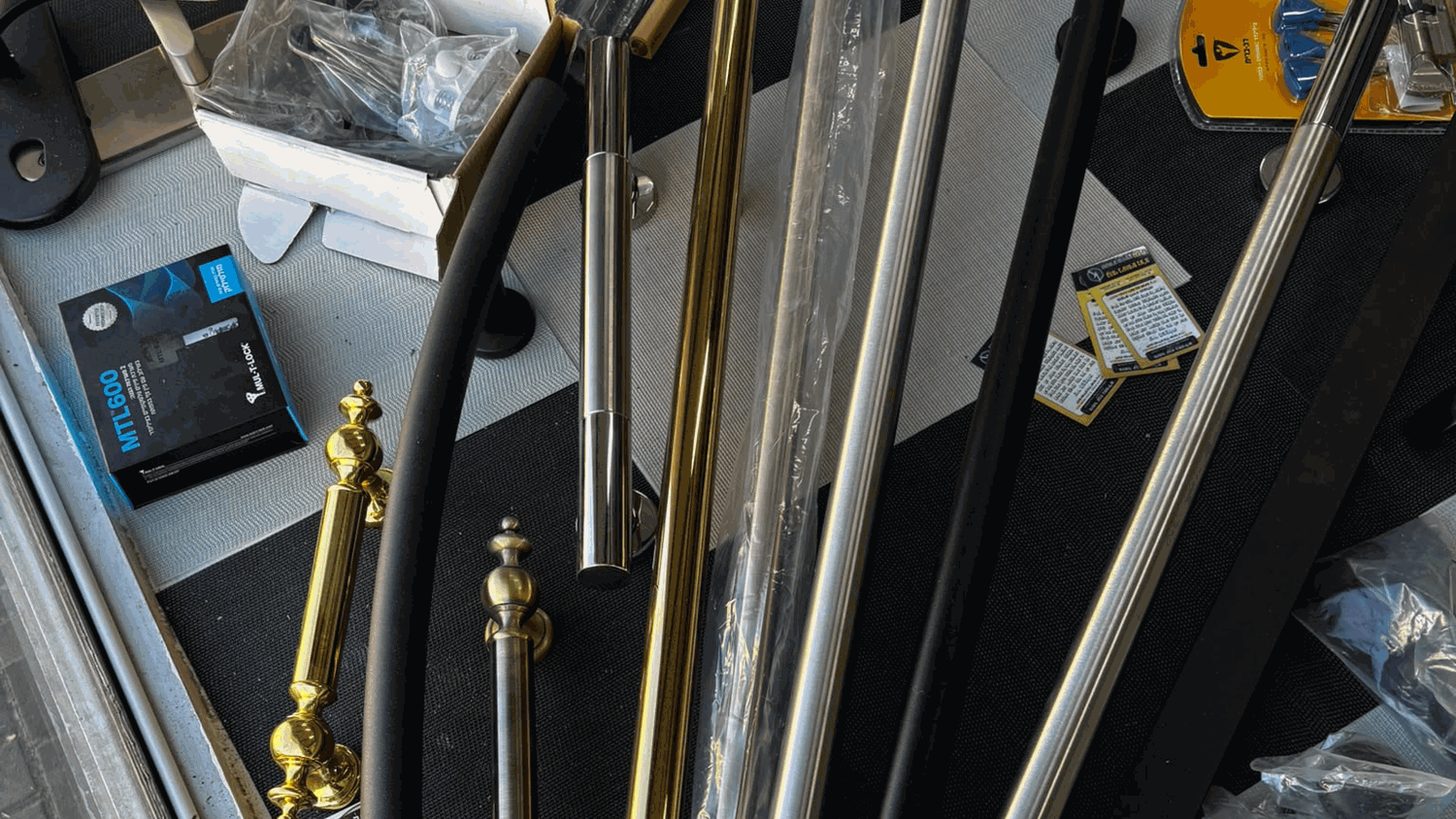
Our showroom has a whole table of handles, and most customers stand in front of it asking the same thing: which handle suits my door? You grab a door handle several times a day, every day, for years, so it is worth choosing with your eyes open. Here are the kinds of handle we fit, what each one actually does, and what it costs.
Four kinds of entrance-door handle
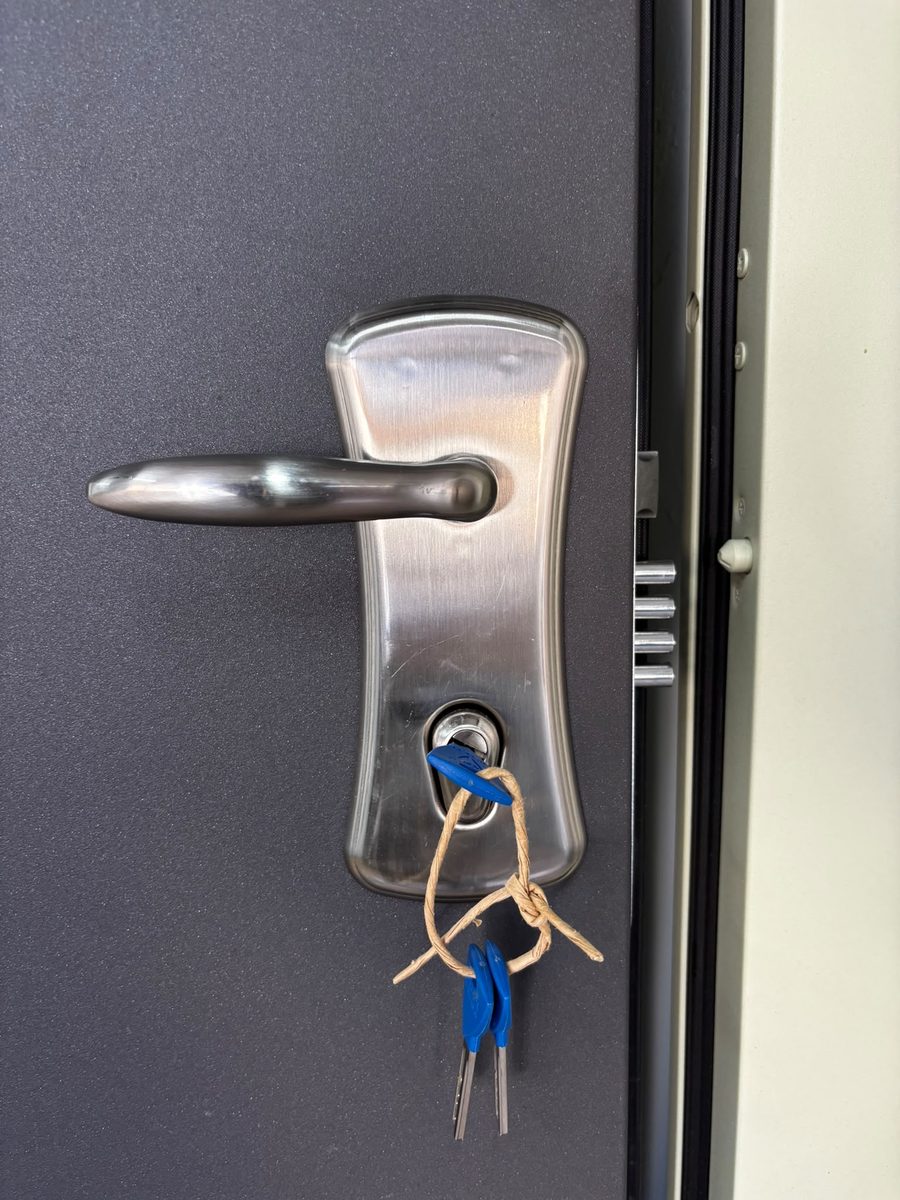
- Lever on a long backplate. A lever on a long metal plate, with the cylinder hole inside the plate. This is the classic handle of steel doors, and the plate covers and protects the area around the lock. With our doors this is the handle included in the price.
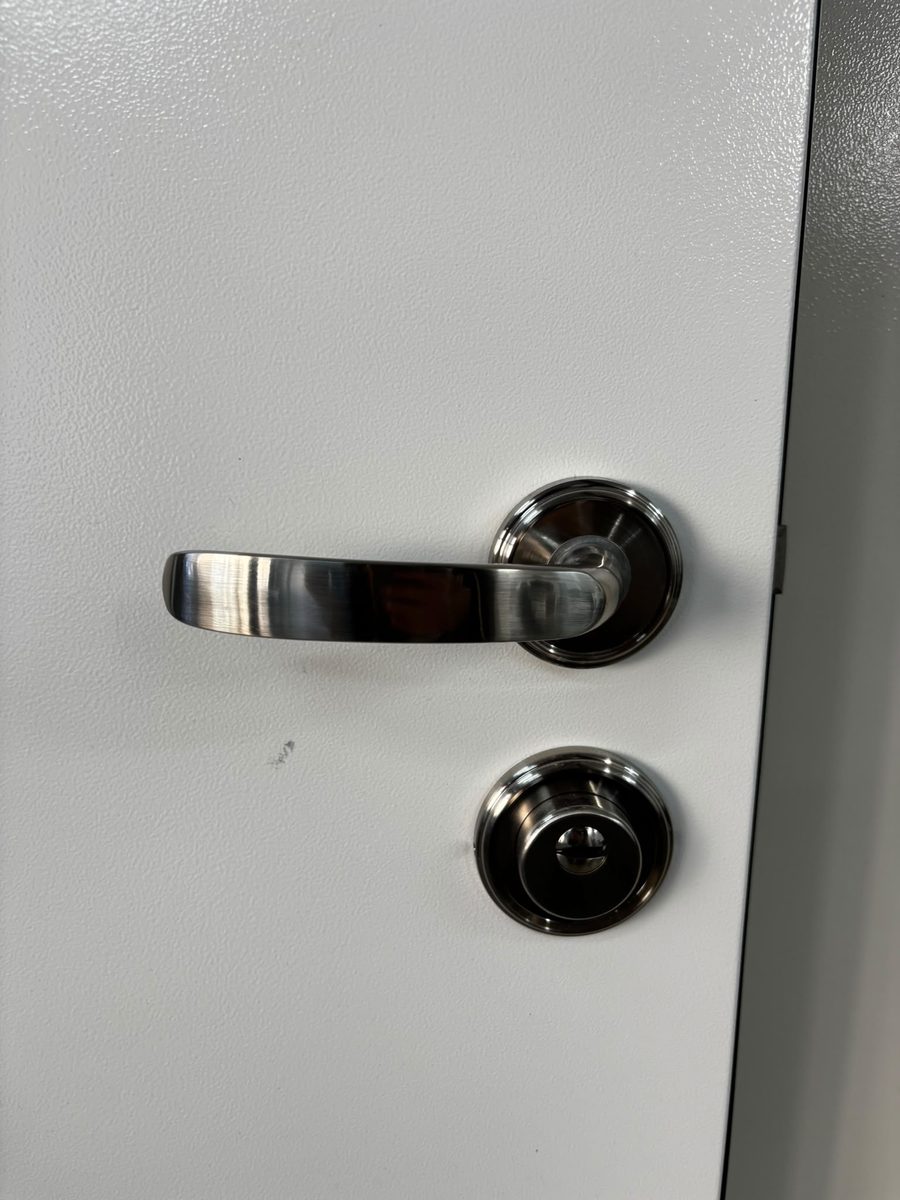
- Lever on a rose. The same lever, on a small round rose, with the cylinder getting its own round rosette below it. It looks cleaner and more modern. It is also the handle Rav-Bariach fits as standard on its doors (the Coral model).
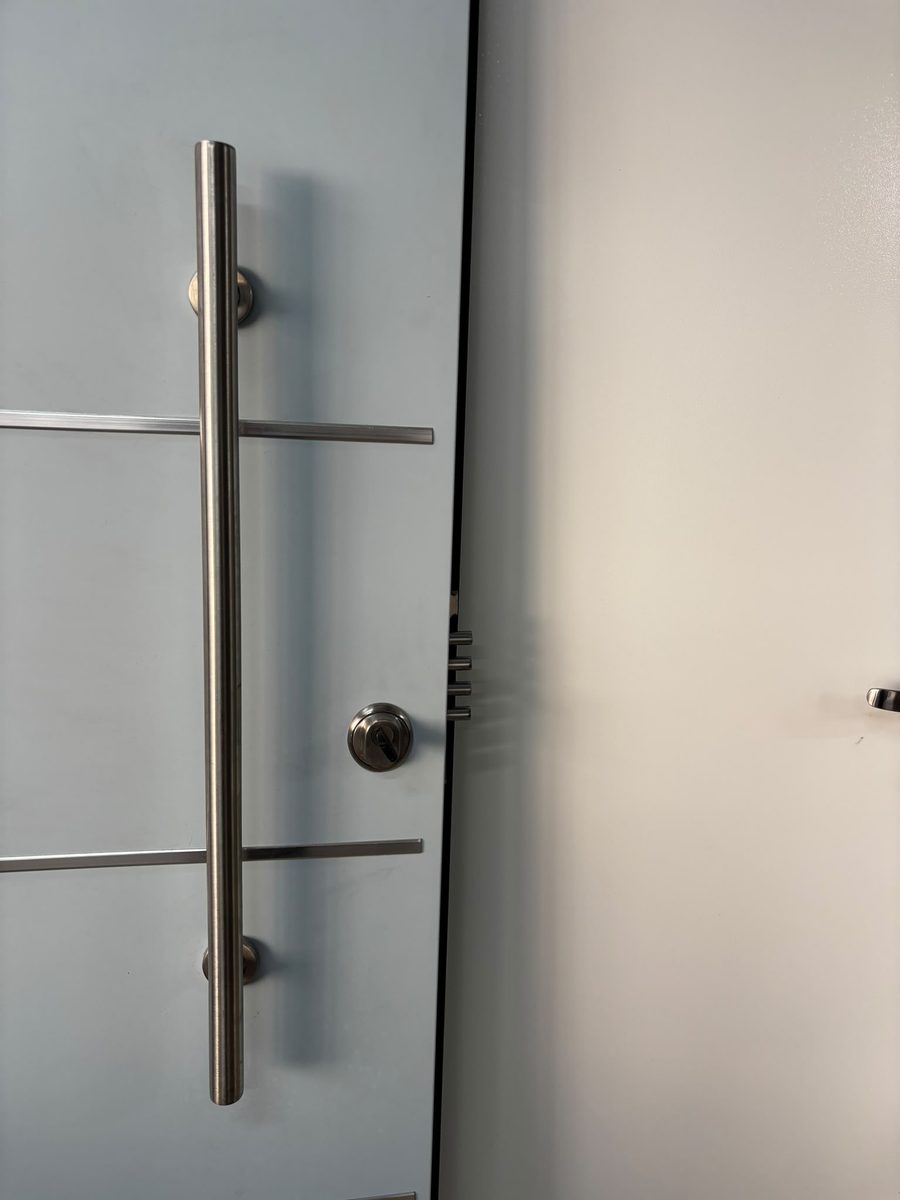
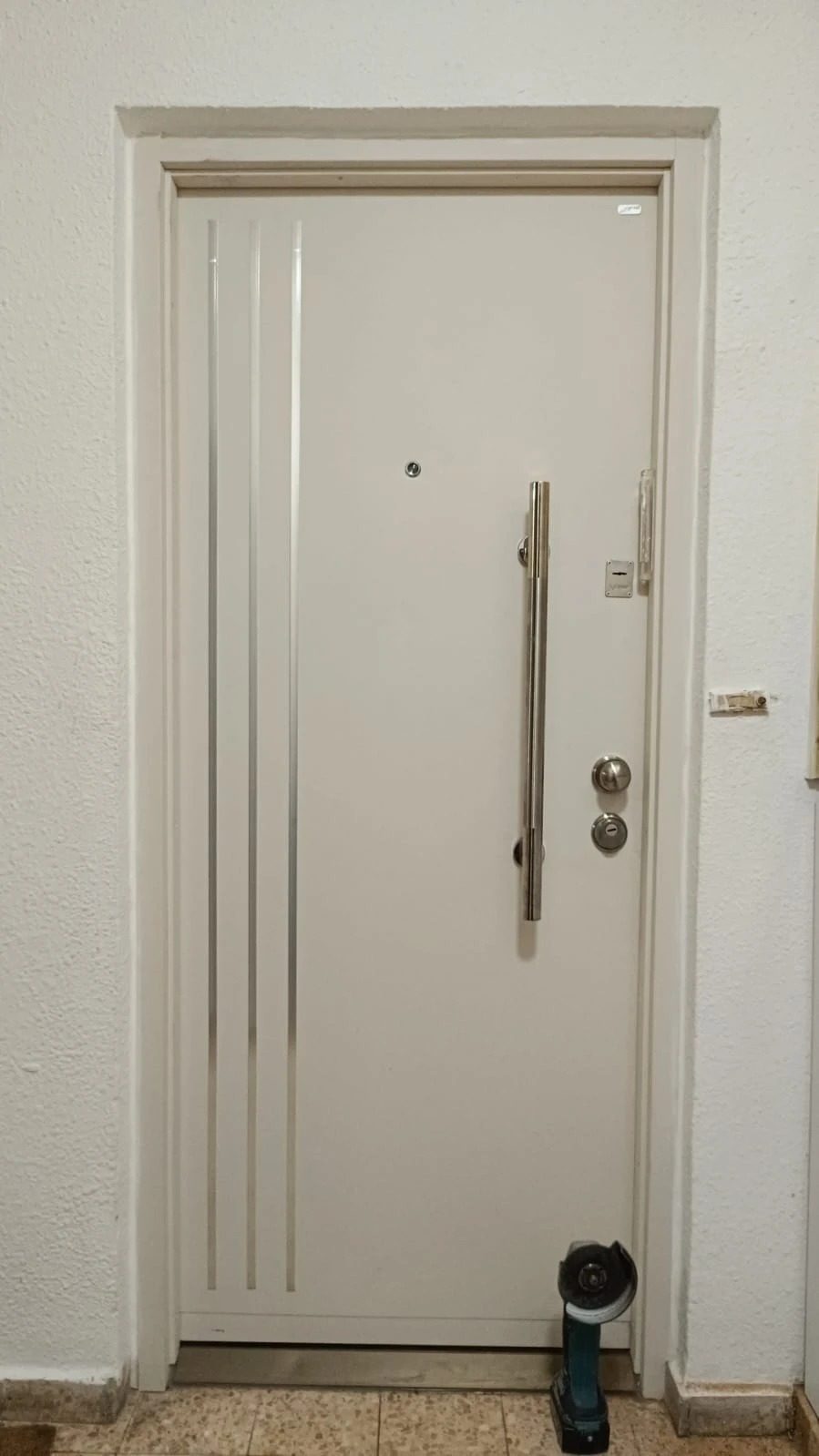
- Long pull bar. A bar you grab from outside, anywhere from 30 cm to 2 metres long, with an ordinary lever inside. From outside the bar does not open the door: you pull to close it and open only with the key. More on this below.
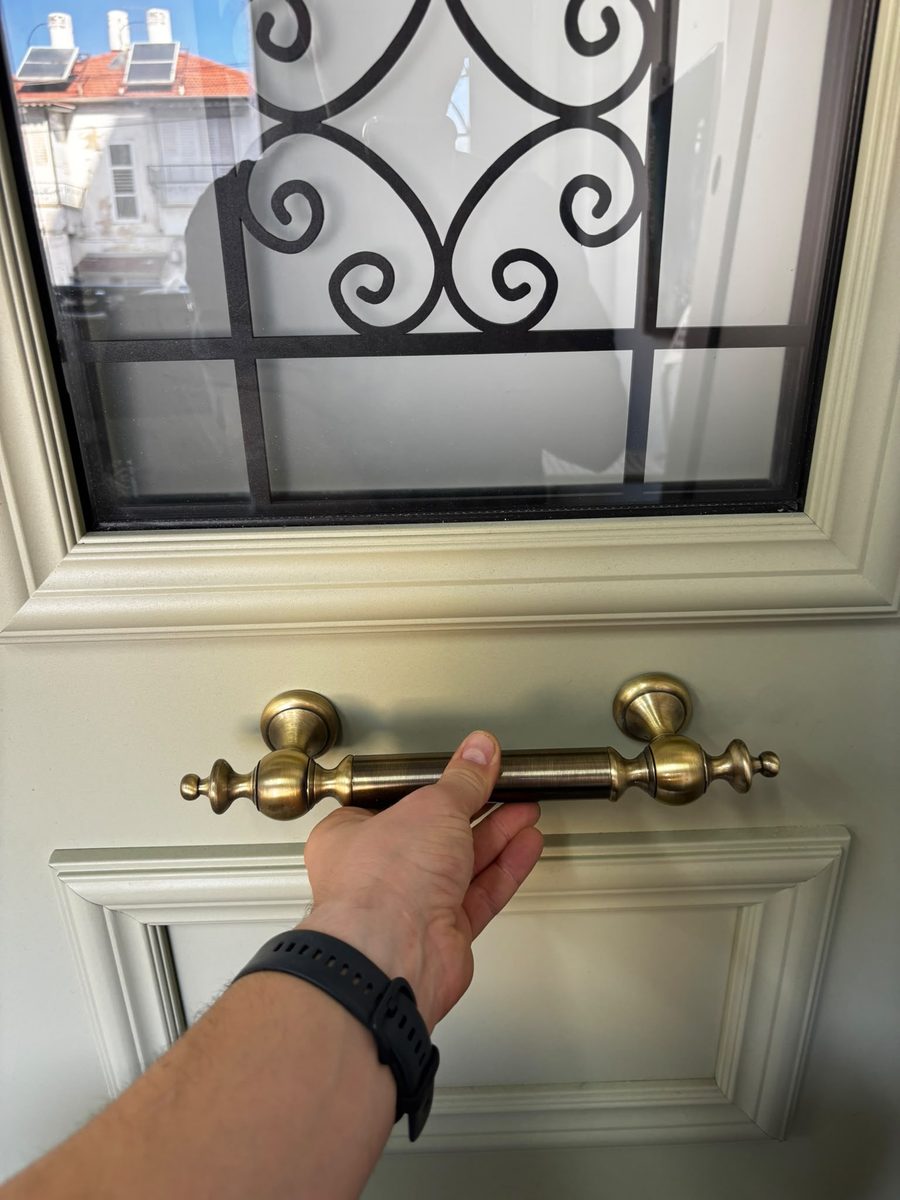
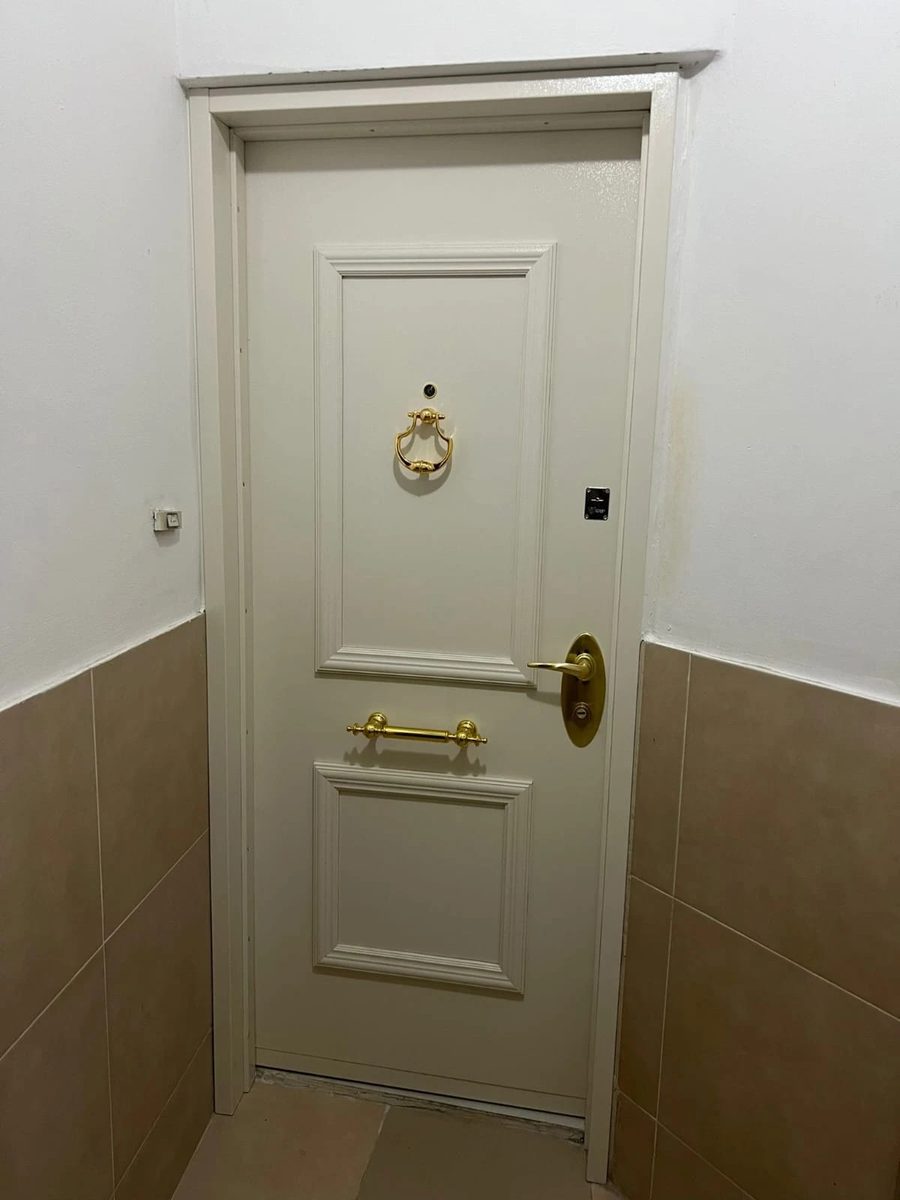
- Fixed or classic handle. A knob, a bronze handle or a horizontal handle outside and an ordinary lever inside. It works like a pull bar: from outside you open with the key only. It suits classic panelled doors.
Pull bars: what to know before you choose one
A long pull bar is the most popular choice on designer doors today, and it really changes the whole look of a door. But it helps to understand how it works. The outside bar is fixed: it does not move the lock's latch. You close the door by pulling it shut, and from outside you open it only by turning the key. Inside there is an ordinary lever, so leaving the house stays simple. The upshot: whoever steps out and pulls the door shut without a key stays outside.
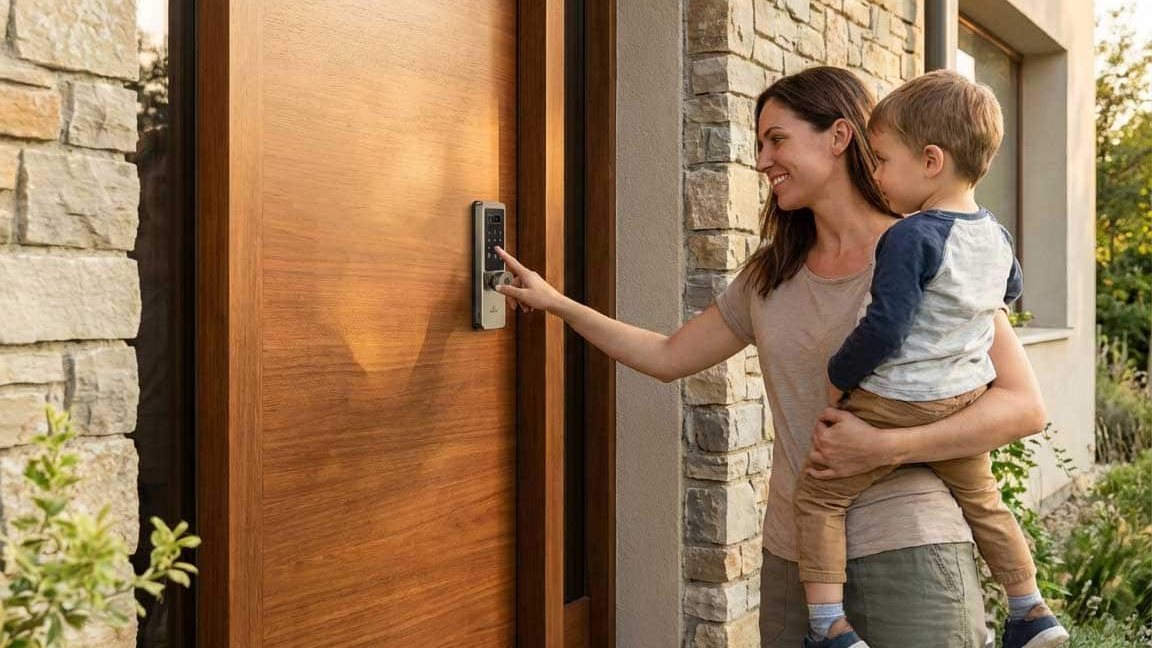
That is why many customers who choose a pull bar add a smart lock with a code or fingerprint, so nobody gets stuck outside. Length comes in two ranges: up to a metre (70 to 100 cm), which suits most apartment doors, and over a metre (120 to 200 cm), which stands out more and suits a tall door or a private house. For shape you choose between a round bar and a rectangular one, and there is also a recessed handle: a channel cut into the leaf and painted with the door.
A classic handle for a classic door
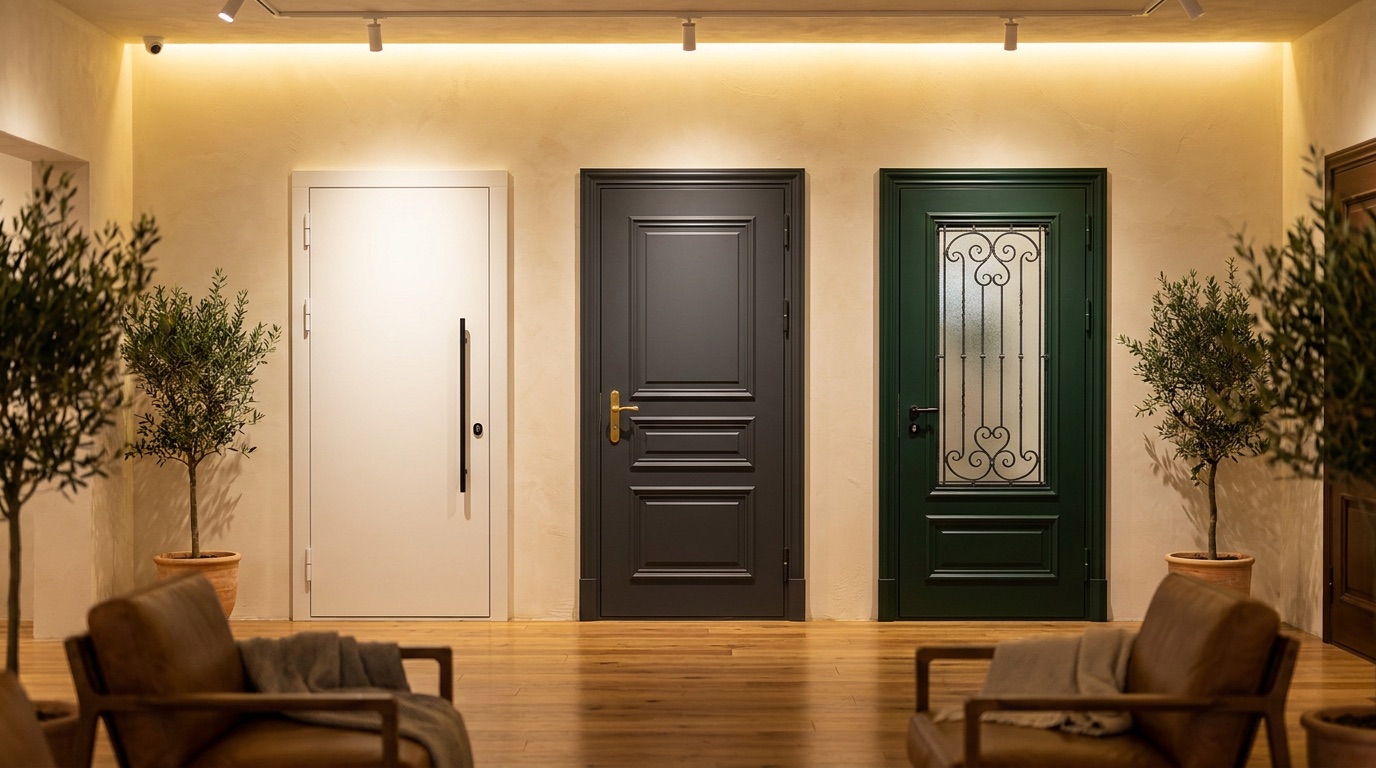
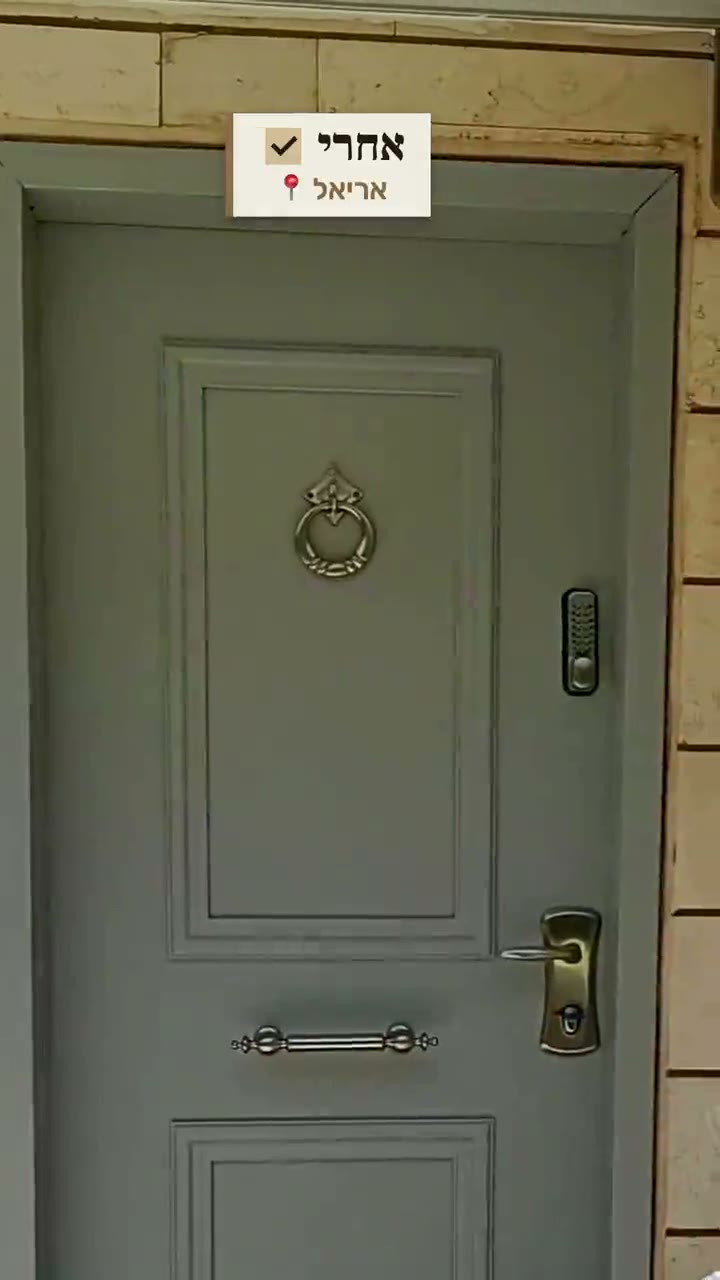
A door with frames, mouldings or a window with a decorative grille looks best with a handle in its own style: a horizontal handle in antique bronze or gold, a knob in the middle of the door, sometimes a knocker too. The rule here is simple: the handle should speak the same language as the door. A modern stainless pull bar on a classic door looks like a mistake, and vice versa. Also worth knowing: brass and bronze change colour over the years, especially near the sea. Some people love that patina; others prefer a finish that doesn't change.
Material and finish: what lasts
Most apartment doors sit in a covered stairwell, where almost any good handle lasts for years. On a private-house door facing sun, rain or sea air, the material decides how long the handle keeps looking good:
- Stainless steel. It has no coating that can peel. The common grade is 304, and for a house near the sea 316 is better, as it stands up to salt. Don't clean it with chlorine-based products.
- Brass and bronze. A heavy, quality material that plating bonds to well. Outdoors it darkens over time, and near the sea greenish spots can appear. Lacquer slows this down but doesn't stop it.
- Zamak (die-cast zinc). What most cheap handles are made of. It is more porous and finishes bond to it less well, which is why handle makers don't recommend it for an exterior door exposed to the weather.
- The finish. PVD (the finish of most good black and gold handles) is the most scratch-resistant and doesn't fade. Black powder coat can chip in places, and chrome or nickel plating is thinner and can wear. A brushed (satin) finish hides fingerprints; polished chrome shows every touch.
What an entrance door handle costs
In shops and on price-comparison sites, a pair of ordinary Rav-Bariach levers (the Coral model) costs roughly ₪200 to ₪280, Rav-Bariach pull bars ₪300 to ₪850 depending on model and length, and designer pull bars in black or gold reach ₪700 to ₪1,200, before fitting. When the handle comes with a new door from us, fitting is already included, and this is what it adds to the door price:
| Handle | Added to the door price |
|---|---|
| Ordinary lever on a long backplate | Included |
| Ordinary lever on a rose (Coral) | ₪100 |
| Knob handle | ₪200 |
| Square handles | ₪390 |
| Classic horizontal handle | ₪300 |
| Round pull bar | ₪500 up to 1 m, ₪800 over 1 m |
| Rectangular pull bar | ₪600 up to 1 m, ₪900 over 1 m |
| Recessed handle in the leaf | ₪1,900 |
| Black or gold finish for a pull bar | Black ₪100, gold ₪200 |
You can see every one of these handles on your own door, in your colour, in our door designer, and the price updates as you choose.
A few more things worth checking
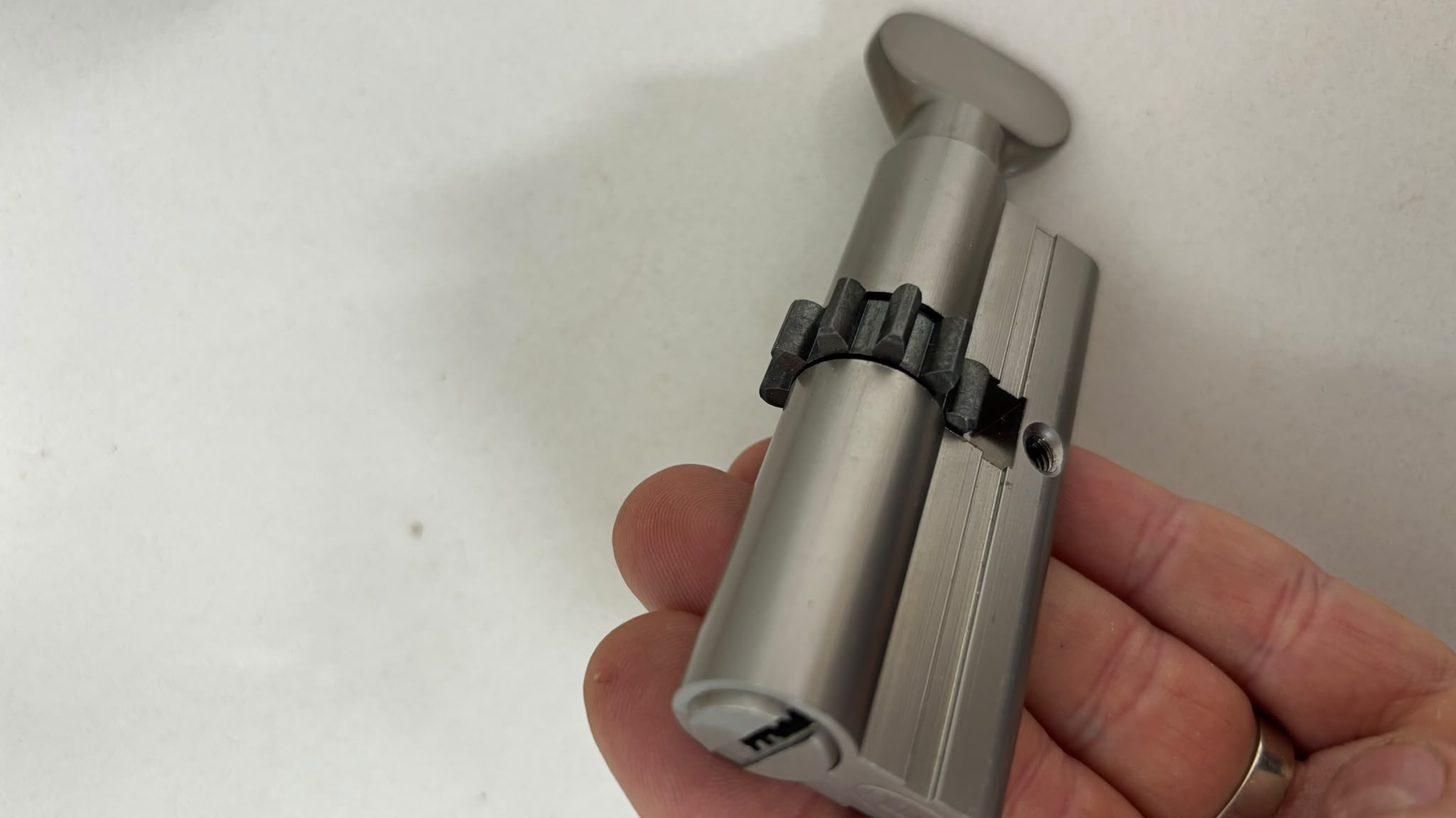
- Cylinder guard. Whatever handle you choose, make sure there is a hardened-steel guard around the cylinder that makes it hard to snap from outside. We cover that, and how to choose the cylinder itself, in our cylinder guide.
- Older people and children. A lever (an ordinary handle you press down) is the easiest for a weak hand, and the Israeli accessibility standard also prefers it to a knob you have to twist. By the same standard, the handle sits 85 to 110 cm above the floor.
- Opening side. A lever is made for a right-hand or a left-hand door. We check this when we measure, so you don't need to know in advance.
- One finish for every detail. A handle, cylinder guard, peephole and knocker in the same finish look like one designed door, not parts collected over time.
- Replacing a handle on an existing door. A new ordinary lever usually fits the old one's holes. A pull bar needs holes drilled right through the door, because it is bolted from both sides.
 ▶ Watch: The small details: knocker, pull handle and code lock
Where we install
We measure, supply and install across central Israel. You can see prices and arrival times by city on the pages for Netanya, Herzliya, Ra'anana, Tel Aviv, Ramat Gan, Petah Tikva, Holon, Bat Yam, Rishon LeZion, Ness Ziona, Rehovot, Yavne, Modiin, Jerusalem and Ashdod.